

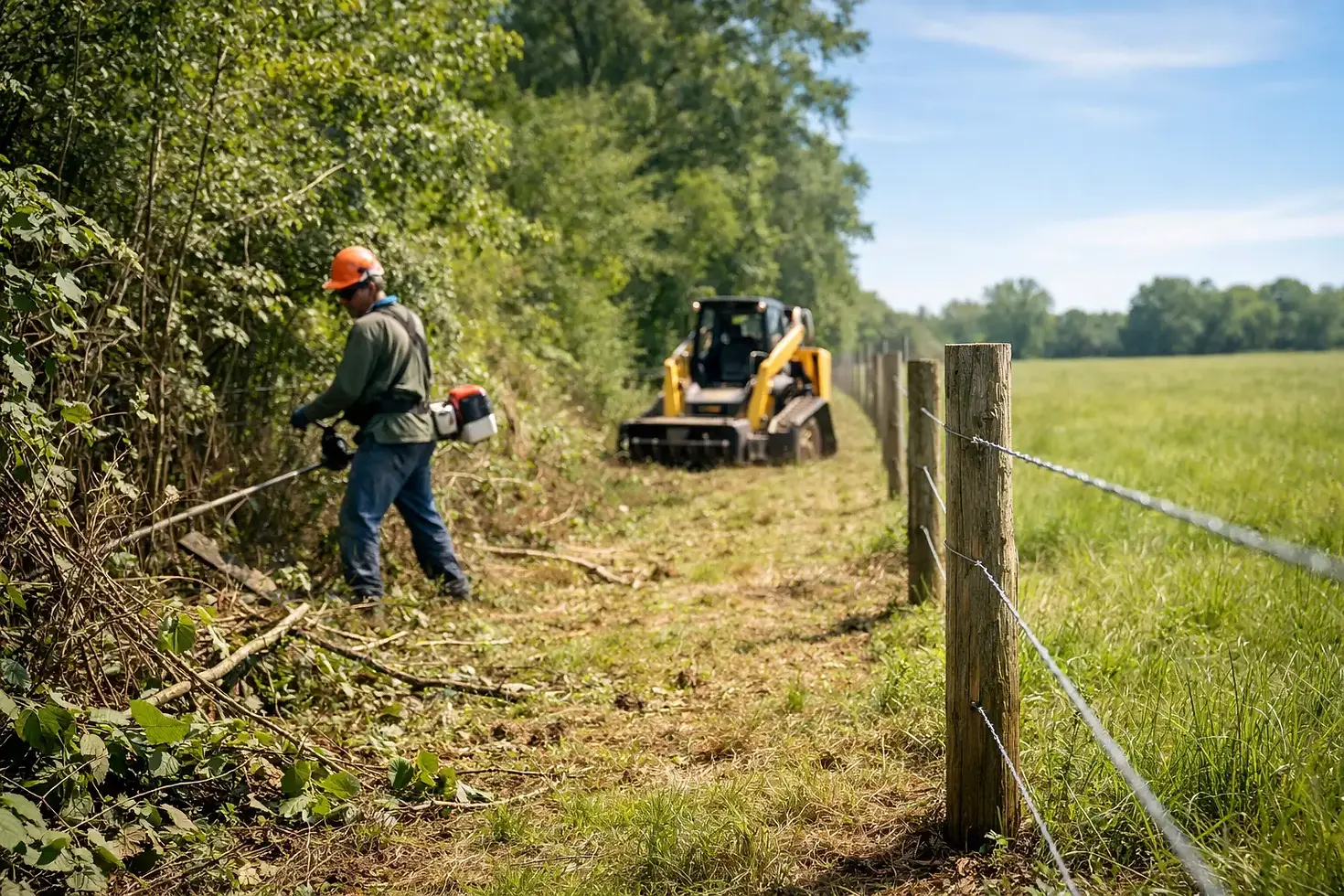
Brush Clearing for Fence Lines That Last

A fence line can look fine from a distance and still hide a mess up close. Vines pull on wire, saplings lean into posts, and thick brush traps moisture where your fence needs to stay dry. That is why brush clearing for fence lines is not just about appearance. It is about protecting the fence you already paid for and making the property easier to manage.
On Georgia properties, fence lines take a beating. Fast-growing vegetation, storm debris, and uneven ground can turn a clean boundary into an overgrown problem in one season. When that growth is left alone, small issues get expensive. Posts rot faster, wire gets buried, and access for repairs becomes harder than it needs to be.
Why brush clearing for fence lines matters
Fence lines do a job every day. They define boundaries, hold livestock, protect privacy, guide traffic, and support the overall look of a property. But a fence can only do that if it stays visible, accessible, and structurally sound.
Brush growing along a fence creates pressure from every direction. Woody growth can push against panels or woven wire. Vines wrap tight and add weight. Low brush holds moisture around wood posts and creates ideal conditions for decay. In some areas, overgrowth also gives pests and snakes more cover, which makes routine inspections less pleasant and less likely to happen.
There is also the access issue. If you cannot walk or drive the fence line, you cannot inspect it quickly after a storm, spot weak sections, or make small repairs before they turn into full replacements. For larger properties, that delay costs time and money.
Clean fence lines also make a property look cared for. That matters whether you are maintaining a farm, cleaning up a commercial site, or improving a residential lot before listing it for sale. A sharp boundary changes how the entire property reads from the road.
What overgrowth does to a fence over time
The first stage usually looks harmless. Grass and light weeds come in, then vines start to climb. After that, volunteer trees and brush fill the gaps. Once roots establish along the fence, removal gets more complicated.
At that point, cutting the visible growth is only part of the job. If you leave stumps, tangled vines, and heavy mulch piled where it should not be, the fence line may look better for a few weeks but still be hard to maintain. The right approach depends on what is growing there, how dense it is, and what type of fence you are trying to protect.
Chain link, split rail, barbed wire, farm fence, and privacy fence all react differently to surrounding growth. A privacy fence may suffer from trapped moisture and hidden rot. Wire fencing often gets pulled down by vines and brush weight. Livestock fencing can become unreliable if animals test weak, overgrown areas you have not been able to inspect.
That is where professional clearing makes a difference. It is not just cutting things back. It is removing the material in a way that restores the fence line and keeps it manageable.
The best approach depends on the property
Not every fence line needs the same treatment. A backyard fence on a suburban lot is different from a long rural boundary or a commercial perimeter. Some properties need selective clearing to preserve desirable trees while opening the line. Others need heavy brush removal and debris cleanup before the fence is even visible again.
Terrain matters too. Steep ground, wet areas, and tight access points can limit what equipment makes sense. In North Georgia, many properties deal with mixed growth, rocky sections, and storm fallout. That means the fastest solution is not always a one-machine answer. The best crews look at the whole line, identify obstacles, and clear with a plan.
For some jobs, forestry mulching is the most efficient option because it cuts and processes brush in one pass, reducing haul-off and speeding up the work. For other sections, more precise cutting around existing fencing is the better move. The goal is not to throw equipment at the problem. The goal is a clean, usable fence line without unnecessary damage to the surrounding area.
What a properly cleared fence line should accomplish
A good result is easy to spot. You should be able to see the fence, walk it, and service it without fighting through brush every few feet. The cleared area should improve visibility and access while reducing the chance of fast regrowth crowding the structure right away.
That does not always mean stripping everything bare. On some properties, a measured buffer along the fence line is enough. On others, wider clearing is smarter for long-term maintenance, especially where aggressive brush or young timber keeps coming back.
A proper clearing job should also account for drainage and ground conditions. If vegetation has been trapping water along the line, removing it can help the area dry out and extend the life of posts and footings. Clean-up matters here too. Leaving piles of cut material against the fence defeats the purpose.
When to schedule fence line clearing
If you are already seeing sagging wire, hidden posts, or limbs pressing into the fence, the time is now. Waiting usually means more growth, more labor, and a greater chance that the fence itself will need repairs.
Season matters, but not in the way many property owners think. Brush clearing can be done effectively during much of the year. Dormant season can make some lines easier to assess, while active growing season often reveals just how serious the problem is. After storms, quick action is especially important because downed limbs and broken trees can add immediate strain.
The better question is not what month it is. It is whether the fence line is getting easier or harder to manage. If it is getting harder, the job is not going to get cheaper by sitting.
Why DIY fence line clearing often stalls out
A lot of property owners start with good intentions. A chainsaw, trimmer, and a free weekend seem like enough. For a short stretch of light growth, that may be true. But once the fence line is long, densely overgrown, or packed with thorny brush and saplings, DIY work becomes slow and frustrating.
There is also the issue of working safely around the fence itself. It is easy to damage wire, strike posts, or leave rough stumps that create problems later. Hand clearing can drag on for days and still leave a line that regrows quickly because the root problem was never addressed.
Professional crews bring the equipment and pace that most owners simply do not have. More important, they can clear efficiently without turning the area into a bigger cleanup project. For landowners who value time, fast turnaround is not a luxury. It is the difference between one job getting done and three more being added to the list.
What to look for in a brush clearing contractor
If you are hiring out brush clearing for fence lines, look for a contractor who understands vegetation management, not just basic mowing or tree cutting. Fence line work often calls for selective removal, careful machine operation, and an eye for how the area will hold up after the first pass is complete.
Ask how they handle dense brush, small trees, storm debris, and cleanup. Ask what equipment they use and whether they can work across different property types. A crew that is used to residential, commercial, and rural jobs will usually be better at adjusting to site conditions without wasting time.
It also helps to work with a company that understands urgency. Overgrown fence lines affect security, appearance, and maintenance costs. You should not have to chase a contractor to get the job moving. At All Marine Land Clearing, that focus stays on quick response, efficient equipment, and getting property back into usable shape without dragging the project out.
Fence line clearing is really about control
Most property problems get worse when they are hard to reach. Fence lines are no different. Once brush takes over, inspections happen less often, repairs get postponed, and the boundary starts working against you instead of for you.
Clearing that line gives you control back. You can see what needs attention, move along the fence without obstruction, and keep the property looking maintained instead of neglected. For homeowners, that means a cleaner edge and fewer headaches. For farms, commercial properties, and larger tracts, it means a boundary that does its job and stays serviceable.
If your fence is disappearing under vines, hidden behind saplings, or boxed in by storm debris, the fix is usually straightforward when handled early. A clean fence line is one of those improvements that pays off immediately and keeps paying off every time you inspect, repair, or simply look across your property.


Comments