

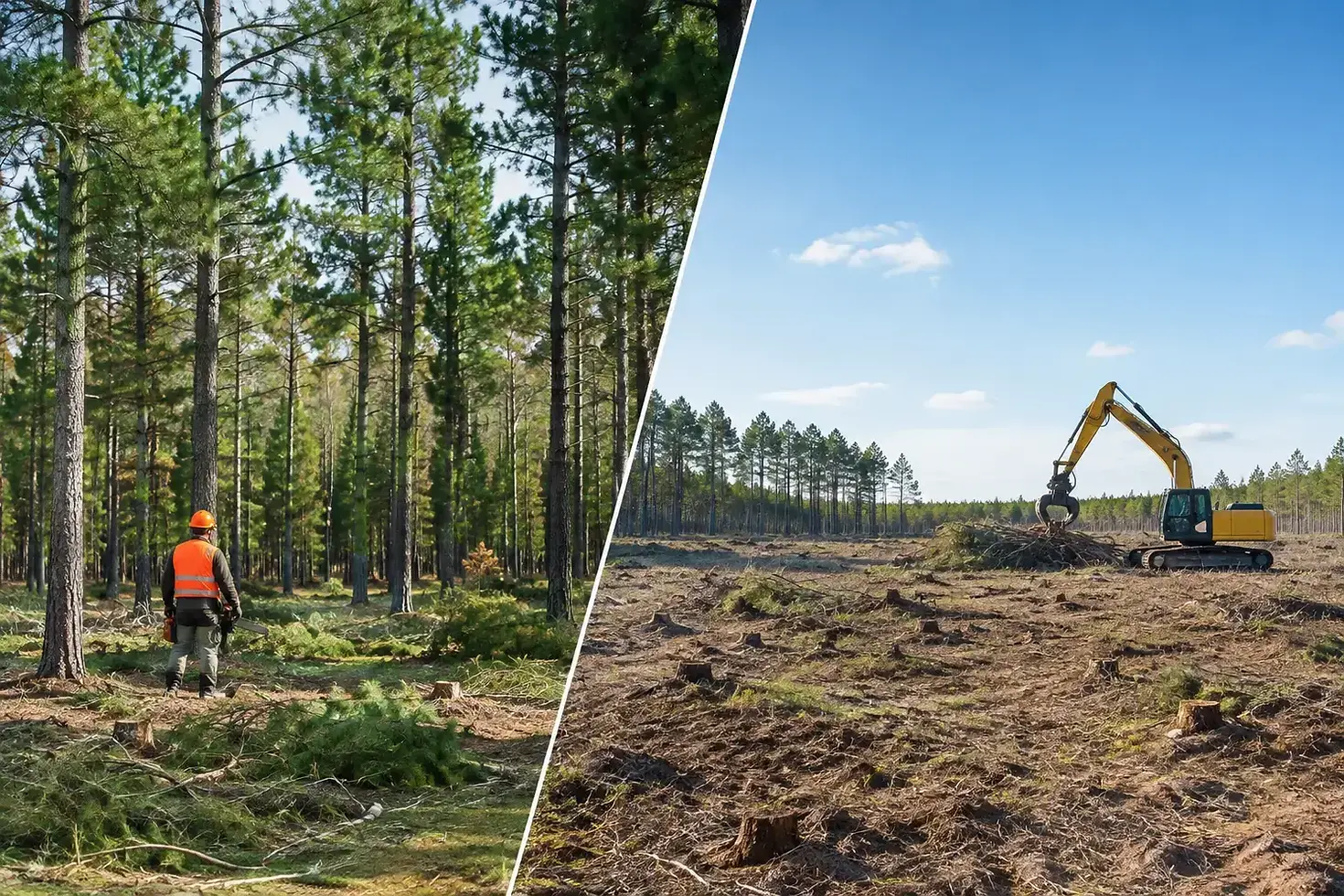
Tree Thinning Versus Clearing for Your Land

A property can look overgrown for two very different reasons. Sometimes the land has too many weak, crowded, or poorly placed trees. Other times, the brush, timber, and undergrowth are preventing any practical use of the site. The right decision in tree thinning versus clearing comes down to what you need the land to do next.
For North Georgia property owners, that choice affects cost, access, appearance, drainage, wildlife cover, and long-term property value. A selective approach can preserve shade and privacy while opening up the ground. Full clearing can turn an unusable lot or acreage into a buildable, accessible, manageable space. Neither is automatically better. The best option is the one that matches your plans for the property.
What Tree Thinning Accomplishes
Tree thinning is selective vegetation removal. Instead of taking down everything, the crew identifies trees, saplings, brush, vines, and deadwood that should be removed so the remaining trees have room to grow and the property is easier to use.
On a wooded residential lot, thinning may mean removing crowded young pines, invasive brush, low limbs, and damaged trees while keeping mature hardwoods that provide shade and curb appeal. On larger acreage, it may create better trails, improve access to a pond or fence line, and reduce the thick understory that makes a property difficult to inspect or maintain.
The finished result should still look wooded, but intentional. You retain the character of the land without leaving it choked with brush and competing growth.
When thinning is the practical choice
Thinning usually makes sense when you want to preserve mature trees, natural screening, or the wooded look of the property. It is often a strong fit for homesites, hunting land, estate lots, trail systems, creek buffers, and parcels where full clearing would remove more cover than necessary.
It can also improve safety. Dead, leaning, storm-damaged, or overcrowded trees can create risks around driveways, structures, power corridors, and frequently used areas. Removing those hazards while keeping healthy trees gives owners a cleaner property without starting from bare ground.
Thinning is not just about appearance. Dense growth holds moisture, hides fallen limbs and debris, limits visibility, and can make it harder to spot erosion, drainage issues, or boundary concerns. Opening the property up makes regular maintenance more manageable.
What Land Clearing Accomplishes
Land clearing removes vegetation across a defined area to prepare it for a new use. Depending on the project, that may include trees, brush, stumps, vines, overgrowth, and debris. The goal is not simply to make the land look cleaner. It is to create usable ground for construction, access, pasture, parking, utilities, fencing, or other planned improvements.
A full clearing project is often the right move when a property owner needs a building pad, driveway route, commercial site, expanded yard, equipment access, or a clean area for future development. On neglected acreage, clearing can reclaim ground that has been lost to years of unmanaged brush and volunteer trees.
Forestry mulching is especially useful for many clearing projects because it cuts and processes vegetation into mulch on site. This can reduce hauling, eliminate burn piles, and leave a protective layer over the soil. The approach is efficient, but the right method still depends on the terrain, vegetation size, intended use, and whether stumps or roots must be removed for the next phase of work.
When clearing is the better investment
Choose clearing when the land must support a specific purpose that trees and heavy brush would prevent. A future home, commercial structure, access road, utility corridor, pasture, or storage area generally needs more than selective trimming.
Clearing is also appropriate after severe storm damage when downed trees, snapped limbs, and tangled brush make a site unsafe or inaccessible. In those situations, speed matters. A crew with the right equipment can restore access quickly and help the owner see the full condition of the property.
Keep in mind that clearing does not always mean taking every tree from the entire parcel. Many owners clear a homesite, driveway, or right-of-way while leaving perimeter trees for privacy, shade, and visual appeal. Defining the work area clearly is one of the best ways to control cost and protect the features you want to keep.
Tree Thinning Versus Clearing: The Main Differences
The biggest difference is the end condition. Thinning improves a wooded property. Clearing changes the use of the land.
With thinning, the remaining trees are part of the plan. The work focuses on selection, spacing, safety, and visibility. With clearing, the target area is prepared for open use, construction, access, or conversion to another purpose.
Cost can differ as well, but it is not as simple as saying thinning is always cheaper. Selective work can require more careful decision-making and maneuvering around trees that must stay. Dense brush clearing with a forestry mulcher may move quickly, while large-tree removal, stump removal, steep slopes, wet ground, and difficult access can add time to either type of project.
Soil impact is another factor. Preserving established trees helps hold the wooded feel of a site and can provide valuable shade. Clearing creates room for improvements, but the property may need a follow-up plan for grading, drainage, erosion control, seeding, or construction. If you are clearing near streams, ponds, slopes, or property lines, thoughtful planning matters before equipment arrives.
Start With the Land’s Next Use
The most useful question is not, “What can we remove?” It is, “What do I need this property to become?”
If you want a cleaner backyard with mature trees still standing, thinning is likely the better direction. If you need room for a new shop, home, driveway, or pasture, clearing may be necessary. If you want both, selective clearing can create open areas while preserving a wooded border and the best specimen trees.
Walk the property with your future use in mind. Mark possible building locations, driveway routes, utility paths, fence lines, trails, and areas where privacy matters. Consider where water flows after heavy rain. Look for trees with broad canopies, healthy structure, or value as a visual screen. These details help turn a general request to “clean up the land” into a plan that delivers the result you actually want.
For commercial owners and developers, the same principle applies at a larger scale. A right-of-way needs dependable access and visibility. A future site needs clear work zones. A storm-damaged parcel needs safe entry before other trades can begin. The scope should support the next contractor, not create another obstacle for them.
Avoid the Two Common Mistakes
The first mistake is clearing too much too soon. Once healthy mature trees are removed, the shade, privacy, and established look they provide can take decades to replace. Property owners sometimes clear broadly because the site feels overwhelming, then realize they wanted more natural cover around the edges.
The second mistake is thinning when the property really needs clearing. Removing a few trees will not create a buildable pad, solve access problems, or prepare a dense lot for development. It can leave the owner paying for one phase of work, only to need a larger clearing project later.
A professional site assessment helps avoid both outcomes. The crew should look at vegetation density, tree size, slope, access points, hidden debris, desired finish, and the equipment needed to perform the work efficiently. It is also wise to confirm local requirements, utility locations, and any applicable setbacks before work begins.
Get a Plan Built Around Your Property
The right vegetation management plan should make your land easier to use, not just different to look at. All Marine Land Clearing helps North Georgia owners evaluate whether selective thinning, targeted clearing, forestry mulching, or a combination of services will best serve the property.
A clear scope, the right equipment, and an experienced crew can turn overgrown ground into a safer, cleaner, more valuable part of your property. Before removing a single tree, decide what you want the land to do for you next - then choose the approach that gets it there without wasting time or leaving work unfinished.


Comments