

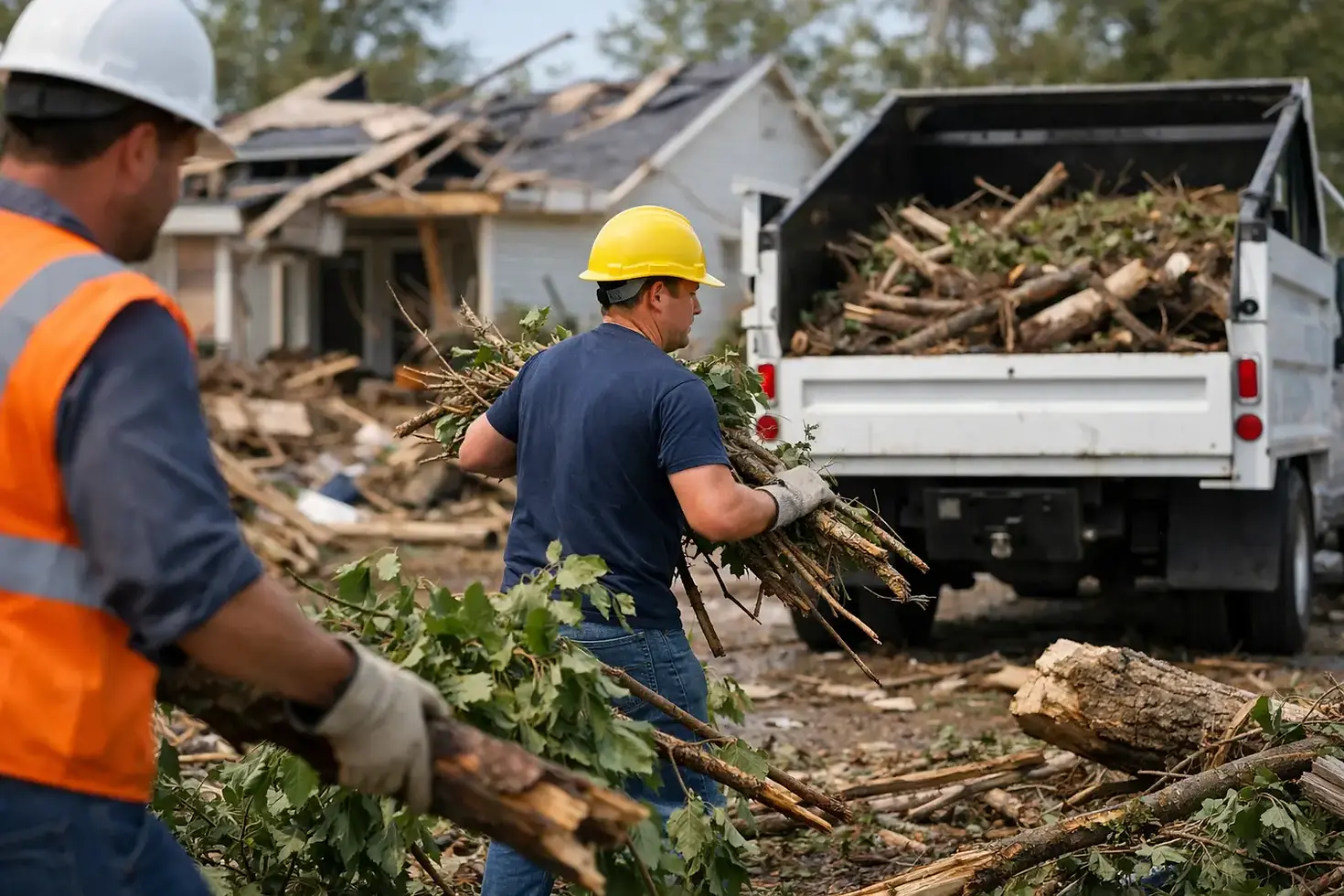
First Steps for Debris Removal After Severe Storms

A downed oak across a driveway, limbs tangled in a fence line, and brush scattered across an access road can turn a manageable property into a safety problem overnight. Debris removal after severe storms is not just about making a property look better again. It is about restoring access, identifying hazards, protecting usable land, and getting the cleanup handled before storm damage creates a bigger issue.
For North Georgia homeowners, acreage owners, developers, and commercial property managers, the right response depends on what came down, where it landed, and what needs to happen next. A few loose branches may be a simple cleanup job. Large trees, broken limbs, washed-out brush piles, and blocked rights-of-way call for a more organized approach and the right equipment.
Start With Safety, Not Cleanup
The first job after a severe storm is to assess the property from a safe distance. Do not walk underneath hanging limbs, climb over fallen trees, or approach any debris touching power lines. Storm-damaged trees can be under pressure in ways that are hard to see. A limb that looks stable can shift without warning once it is cut or moved.
Check the main access points first: driveways, gates, private roads, building entrances, and areas used by equipment or vehicles. If a tree has blocked the only entrance to a home, worksite, pasture, or commercial lot, restoring safe access should be the priority.
Keep an eye out for damaged utilities, leaning trees, broken fencing, standing water, and exposed roots. If power lines are involved, contact the utility provider and keep everyone clear of the area. No cleanup schedule is worth taking chances around electrical hazards.
Document Damage Before Moving It
Once the area is safe, take clear photos and video before debris is removed. Capture wide views of the affected area as well as close-up images of damaged trees, fences, structures, roads, drainage areas, and equipment. This documentation can be useful for insurance claims, property records, tenant communication, or contractor planning.
It also helps separate storm debris from problems that existed before the storm. For larger properties, mark the locations of major obstructions on a map or note them by driveway, field, lot line, or road section. That gives a cleanup crew a clear picture of where work is needed and where equipment can enter.
Prioritize What Needs to Move First
Not all storm debris needs the same response. The best cleanup plan handles urgent hazards first, then works through the remaining material in a way that keeps the property usable.
Start with debris that blocks access, threatens structures, interferes with utilities, or creates a public safety concern. Next, address fallen trees and brush that prevent normal use of a driveway, yard, construction site, trail, fence line, or right-of-way. Cosmetic cleanup can come later, but access and safety should not wait.
On rural acreage, a blocked entrance may prevent livestock care, deliveries, or emergency access. On a commercial site, debris in parking areas, loading zones, or travel paths can slow operations and create liability concerns. For developers and landowners preparing a site, storm debris can delay grading, inspections, and the next phase of work.
When Storm Debris Requires Heavy Equipment
Homeowners can often handle small branches and light yard debris. The situation changes when there are mature trees, widespread brush, steep terrain, dense vegetation, or debris spread across several acres. Cutting, dragging, and hauling material by hand can take days or weeks, and it may leave behind piles that still need to be managed.
Professional storm cleanup equipment can clear large material efficiently while reducing unnecessary disturbance to the property. Forestry mulchers are especially useful when storm-damaged brush, small trees, limbs, and vegetation need to be processed on site. Rather than creating a large burn pile or hauling every piece of organic material away, mulching can turn suitable debris into ground cover that helps control erosion and keeps the site cleaner.
That does not mean every fallen tree should be mulched. Large trunks may need to be cut, moved, or hauled depending on their size, location, condition, and the owner's plans for the material. Trees near structures, slopes, streams, septic systems, or utility areas require added care. The right method depends on the site, not a one-size-fits-all cleanup plan.
Why Piling Debris Can Create Another Problem
It is tempting to push storm debris into the corner of a lot and deal with it later. That can work for a small amount of clean brush in the right location, but large unmanaged piles attract pests, limit usable space, and can become a fire concern during dry periods. They may also block drainage or conceal stumps, wire, metal, and other hazards.
For property owners trying to reclaim a yard, lot, field edge, or wooded area, leaving debris behind defeats the purpose of cleanup. A finished result should restore access and leave the area ready for its next use, whether that is rebuilding a fence, maintaining a road, improving appearance, or moving forward with a construction plan.
Protect the Ground During Cleanup
North Georgia storms often bring heavy rain along with wind damage. Saturated ground can make cleanup more difficult, especially on slopes, near creeks, and in low-lying areas. Moving heavy material across wet ground without a plan can create ruts, damage drainage paths, and spread debris farther into the property.
A qualified land clearing crew evaluates where equipment can travel, how debris can be staged, and what areas need to be avoided. Selective clearing may be the better choice when a property has healthy trees worth preserving or when storm damage is limited to a particular section. The goal is not to clear more than necessary. It is to remove the damaged material and restore the property without creating avoidable disruption.
Mulch from processed vegetation can be beneficial when applied appropriately, especially on exposed soil. It can help reduce mud, limit erosion, and improve the appearance of a recently cleared area. However, deep mulch piles against structures, in drainage channels, or where future grading is planned may not make sense. A cleanup plan should support what you want to do with the land next.
Look Beyond the Visible Damage
The tree on the driveway is obvious. The weakened trees left standing around it are often the bigger concern. Severe wind can crack trunks, loosen root systems, split major limbs, and leave trees leaning toward homes, barns, roads, or neighboring property. These hazards may not fall immediately, but they can fail during the next storm or high-wind day.
After major weather events, inspect the perimeter of cleared areas, driveways, utility paths, and building sites. Look for fresh lean, lifted roots, broken tops, hanging branches, and trees with visible trunk splits. If damaged vegetation is in an active access area or right-of-way, timely removal helps prevent a second emergency.
This is also a good time to identify overgrown edges, dead trees, and brush that were not caused by the storm but made the damage worse. Selective clearing and brush management can improve sightlines, access, drainage, and future maintenance. For many owners, storm cleanup becomes an opportunity to get ahead of the vegetation problems that have been building for years.
Choose a Crew That Can Finish the Job
A fast response matters, but so does the quality of the finish. Ask whether the crew can handle the full scope of work: opening access, removing downed trees, managing brush, processing vegetation, and leaving the property clean and usable. A crew with the proper machinery can often complete work faster than separate crews handling cutting, hauling, and site cleanup one step at a time.
All Marine Land Clearing provides storm cleanup and vegetation management for property owners across North Georgia, with the equipment and hands-on experience to handle everything from blocked access roads to storm-damaged acreage. As a veteran-owned company, the focus is straightforward: show up ready, work efficiently, and leave the ground in better shape than it was found.
After the immediate danger has passed, do not let storm debris sit long enough to become the next problem. A clear property gives you room to make repairs, restore normal access, and move forward with confidence.


Comments