

Choosing a Forestry Mulcher for Thick Undergrowth
- Josh Hopkins

- 1 day ago
- 5 min read
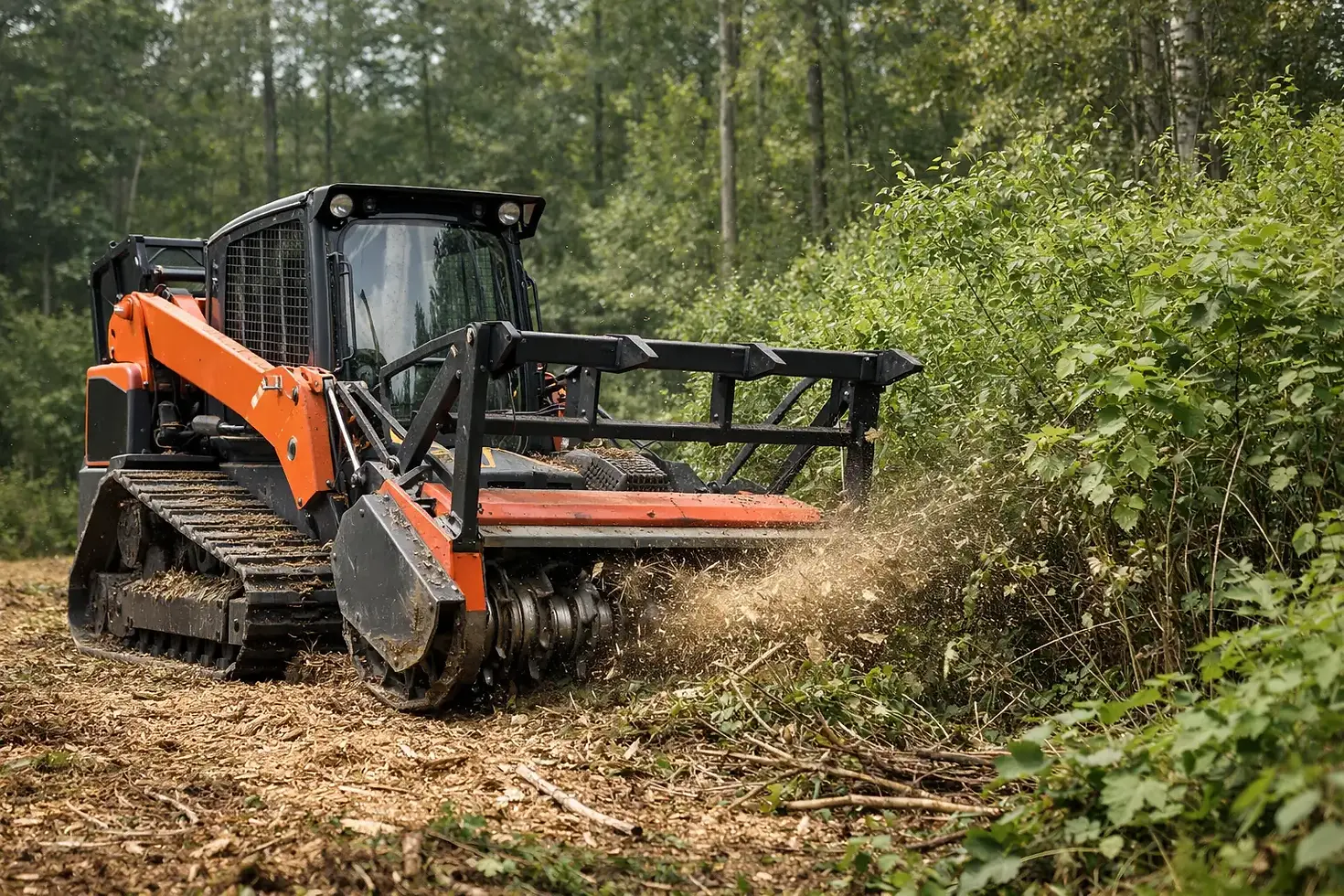
A property can look manageable from the road and still be nearly impossible to walk once you step past the tree line. Briars catch your clothes, vines pull down young trees, and dense brush hides stumps, holes, fallen limbs, and old fence wire. A forestry mulcher for thick undergrowth is built for this kind of work - turning tangled vegetation into a clean layer of mulch without the long haul-off process that comes with traditional clearing.
For property owners across North Georgia, forestry mulching can be a fast way to reclaim overgrown acreage, open access roads, clean up lot edges, restore storm-damaged land, or prepare a property for its next use. The key is matching the equipment and approach to what is actually growing on the ground.
What a Forestry Mulcher Can Handle
A forestry mulcher uses a powerful rotating drum or cutting head fitted with hardened teeth to cut, grind, and process vegetation in place. Rather than pushing brush into piles and burning or hauling it away, the machine breaks it down into mulch that stays on the property.
For thick undergrowth, that capability matters. Dense vegetation is rarely just grass and weeds. It often includes privet, kudzu, blackberry briars, saplings, volunteer trees, low limbs, fallen brush, and vines wrapped through standing timber. A properly sized mulcher can cut through that material while giving the operator control over which trees stay and which ones go.
That makes forestry mulching especially useful for selective clearing. You may want to keep mature hardwoods for shade and appearance while removing the brush, invasive growth, and small trees crowding underneath. The result is land that feels larger, looks maintained, and is easier to inspect and use.
Why Thick Undergrowth Requires the Right Machine
Not every brush cutter is a forestry mulcher, and not every mulcher is suited for heavy growth. Light-duty equipment may handle grass, weeds, and small brush, but thick undergrowth can quickly slow it down. Vines can wrap around components, hardwood saplings can overload a smaller head, and hidden debris can damage equipment if the operator is not prepared for it.
The right setup depends on the density of the growth, the diameter and species of the trees, the slope of the land, soil conditions, and access to the work area. A compact track loader with a mulching attachment can be effective in tighter residential spaces or along fence lines. Larger dedicated forestry mulchers bring more horsepower and production for broad acreage, heavy brush, and thicker trees.
More power is not always the only answer. Access and finish quality matter, too. A large machine may clear open acreage quickly, while a more maneuverable setup may be the better choice around homes, ponds, barns, utilities, and established trees. Experienced operators evaluate the whole site before choosing how to tackle it.
What Happens to the Vegetation
The vegetation is processed where it stands, leaving a protective layer of chipped material across the soil. That mulch helps reduce erosion, holds moisture, and can slow the return of new weeds and brush. It also removes the need for burn piles, which can be time-consuming, restricted by conditions, and difficult to manage safely.
The finished surface will not look like a graded construction pad. Forestry mulching leaves a natural ground cover, along with uneven terrain, roots, rocks, and any larger stumps that remain below the mulch. For many property owners, that is exactly the goal: cleaner, more usable land without stripping the site bare.
When Forestry Mulching Is the Best Clearing Method
Forestry mulching works well when the goal is to open up land while preserving the soil and as many desirable trees as possible. It is a strong fit for overgrown residential lots, hunting land, recreational trails, fence-line clearing, right-of-way maintenance, and acreage that has been neglected for years.
It is also valuable after storms. Downed limbs, broken tops, and tangled brush can block driveways, trails, and access routes. A mulcher can process much of that material on site, helping restore order faster than methods that require repeated loading and hauling.
For commercial owners, municipalities, and utility-related clients, mulching provides a practical way to maintain visibility and access along rights-of-way. Keeping brush from taking over roadsides, drainage areas, and service corridors can make future maintenance easier and reduce the risk of vegetation becoming a larger problem.
The biggest advantage is often speed. Instead of cutting, gathering, piling, burning, and hauling vegetation through separate stages, forestry mulching combines much of the work into one operation. That can reduce disruption and move a project from overgrown to usable in far less time.
When a Forestry Mulcher Is Not Enough
Forestry mulching is effective, but it is not a substitute for every kind of site work. If you are preparing for a new home, commercial building, driveway, septic system, or major grading project, the land may need more than vegetation removal. Stump extraction, root removal, excavation, drainage work, and grading may still be required.
Large trees can also change the plan. A mulcher may process smaller trees and brush efficiently, but mature timber often needs to be felled, removed, or handled with specialized equipment. The same is true when there are large rocks, heavy construction debris, abandoned wire, metal, or old equipment hidden in the growth.
A good clearing contractor will be direct about those limits. The right answer may be forestry mulching alone, or it may be mulching paired with conventional land clearing for certain portions of the property. The best approach is the one that fits your end goal, not simply the one that looks fastest on day one.
Preparing Your Property for Mulching
Before work begins, walk the property with the clearing crew if possible. Point out property lines, wells, septic areas, drain fields, buried utilities, irrigation components, gates, fencing, and trees you want protected. If there are old structures, trash piles, wire fencing, or known debris on the site, mention it early.
This step saves time and prevents expensive surprises. Thick undergrowth has a way of concealing hazards, especially on older properties. A clear conversation about access, boundaries, and desired results helps the operator work efficiently while protecting the areas that matter most.
It also helps to define what “cleared” means for your property. Some owners want a clean walking path through the woods. Others want every inch of brush removed from a building lot. Some want to preserve privacy along a boundary while opening the interior acreage. Those are different jobs, and they should be planned differently.
The Finish You Can Expect
A quality forestry mulching job should leave the site visibly transformed: brush is gone, access is improved, and the ground is covered in processed mulch instead of piles of debris. You should be able to see the shape of your land again.
Over time, some regrowth is normal. Georgia’s long growing season is hard on neglected land, and invasive plants can return if they are not managed. The mulch layer can slow that cycle, but ongoing maintenance may be necessary for lots with aggressive vines, privet, or thick brush pressure.
For many owners, the first clearing is the heavy lift. Once the property is opened, future maintenance is usually faster, simpler, and less expensive than reclaiming years of overgrowth all at once.
Get a Clear Plan Before the Work Starts
The value of a forestry mulcher for thick undergrowth comes down to more than horsepower. It comes from having skilled operators, the right equipment for the terrain, and a clear understanding of what you need the property to become. All Marine Land Clearing approaches each job with that practical focus - clearing what needs to go while helping protect the land you want to keep.
Whether you need to open a wooded lot, regain access to acreage, clean up storm damage, or maintain a right-of-way, start with an on-site assessment and a straightforward quote. A well-planned clearing job can turn ground you avoid into property you can use, maintain, and take pride in.


Comments